
By Sam – BrainGrowthHub | 20+ years studying early brain development
There’s a moment most parents recognize… but don’t fully understand.
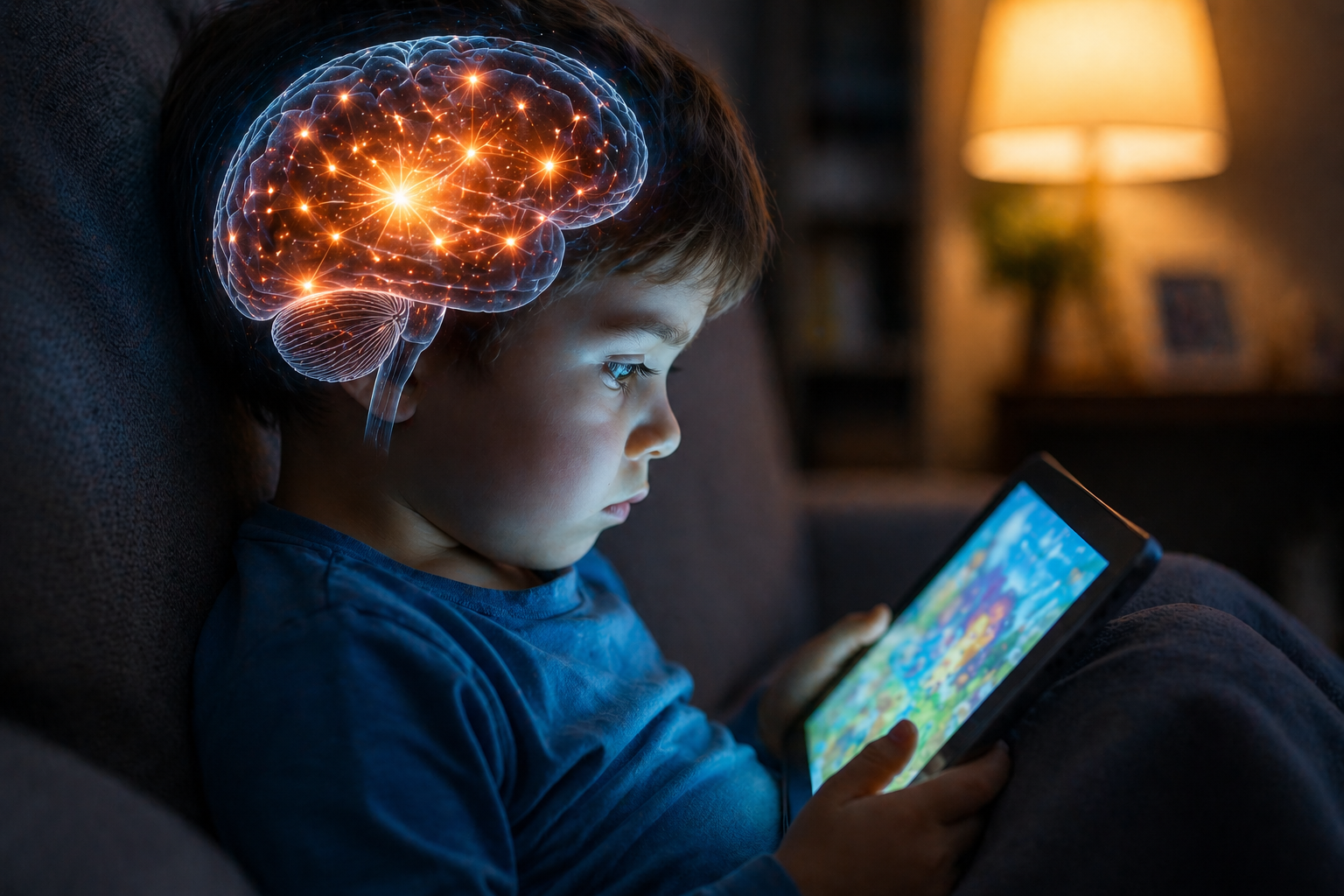
Your child is calm with a screen.
Focused. Quiet. Almost hypnotized.
And the second you take it away… everything changes.
Frustration. Crying. Irritation.
As if you removed something essential.
But here’s what most people miss:
That reaction is not about behavior. It’s about the brain.
The Brain Was Never Designed for This
A child’s brain is built to learn from effort.
Looking. Reaching. Trying. Failing. Trying again.
Every one of these actions strengthens neural pathways through a process known as synaptogenesis.
But screens remove that effort.
They deliver stimulation instantly.
Effortlessly.
Constantly.
The brain doesn’t have to work. It just reacts.
And over time, that changes how the brain develops.
The Dopamine Problem No One Explains Properly
Every time your child watches fast-moving content, plays a game, or scrolls through colorful animations, the brain releases dopamine.
Dopamine is not the enemy. It’s essential.
The problem is the speed and intensity.
In real life:
- rewards are slower
- effort comes first
- satisfaction comes later
With screens:
- reward comes instantly
- effort is almost zero
- stimulation never stops
The brain starts adapting to this pattern.
And that adaptation has consequences.
What Changes Inside the Brain
When a child is exposed to excessive screen time, several subtle but powerful shifts begin to happen.
Not overnight.
Not dramatically at first.
But consistently.
The most common changes include:
- reduced attention span
- lower tolerance for boredom
- difficulty focusing on slower tasks
- decreased motivation for real-world activities
- increased irritability when not stimulated
These are not personality traits.
They are adaptations.
The brain is learning what to expect from the world.
Why Real Life Starts Feeling “Boring”
This is one of the most overlooked effects.
When a child gets used to fast, high-intensity stimulation, everyday life begins to feel… underwhelming.
Books feel slow.
Conversations feel demanding.
Play feels less exciting.
Not because the child is lazy.
But because the brain has been conditioned to expect constant novelty.
This directly impacts something called neuroplasticity.
The brain strengthens what is used most.
If fast stimulation is the dominant input, the brain becomes efficient at processing speed — but less efficient at patience, focus, and deep thinking.
The Hidden Impact on Learning
Learning requires three things:
- attention
- effort
- repetition
Excessive screen exposure disrupts all three.
Attention becomes fragmented.
Effort feels uncomfortable.
Repetition feels unnecessary when novelty is always available.
Over time, this can affect:
- language development
- problem-solving ability
- emotional regulation
- academic readiness
And the most concerning part is this:
It often goes unnoticed until later.
It’s Not About “Good” or “Bad” Screens
Many parents ask the same question:
“What about educational content?”
The answer is not as simple as it seems.
Even high-quality content, when consumed passively and excessively, does not replace real interaction.
The brain does not develop from information alone.
It develops from engagement.
Watching is not the same as doing.
Listening is not the same as interacting.
What Actually Builds a Healthy Brain
After two decades studying early development, one pattern is undeniable.
The strongest brains are not built through stimulation alone.
They are built through connection and experience.
The most powerful inputs are:
- conversation
- eye contact
- physical play
- exploration
- problem-solving in real environments
These experiences require effort.
And that effort is exactly what builds the brain.
The Real Question Parents Should Ask
The question is not:
“Are screens bad?”
The better question is:
“What is my child’s brain practicing every day?”
Because whatever the brain practices…
it becomes good at.
Final Insight
Screen time doesn’t just occupy your child.
It trains your child’s brain to expect a certain kind of world.
Fast. Effortless. Constant.
And when real life doesn’t match that pattern, the brain struggles to adapt.
My Recommendation as a Specialist
You don’t need to eliminate screens completely.
But you do need to protect what matters most.
The early years are not just about keeping your child entertained.
They are about building the foundation of how your child will think, learn, and engage with the world.
And that foundation is shaped by what the brain experiences… every single day.
If you want, I can write the next article in this sequence:
- How to Reduce Screen Time Without Tantrums
- 7 Signs Your Child’s Brain Is Overstimulated
- How to Reset Your Child’s Brain in 7 Days
Just tell me which direction you want to go next.